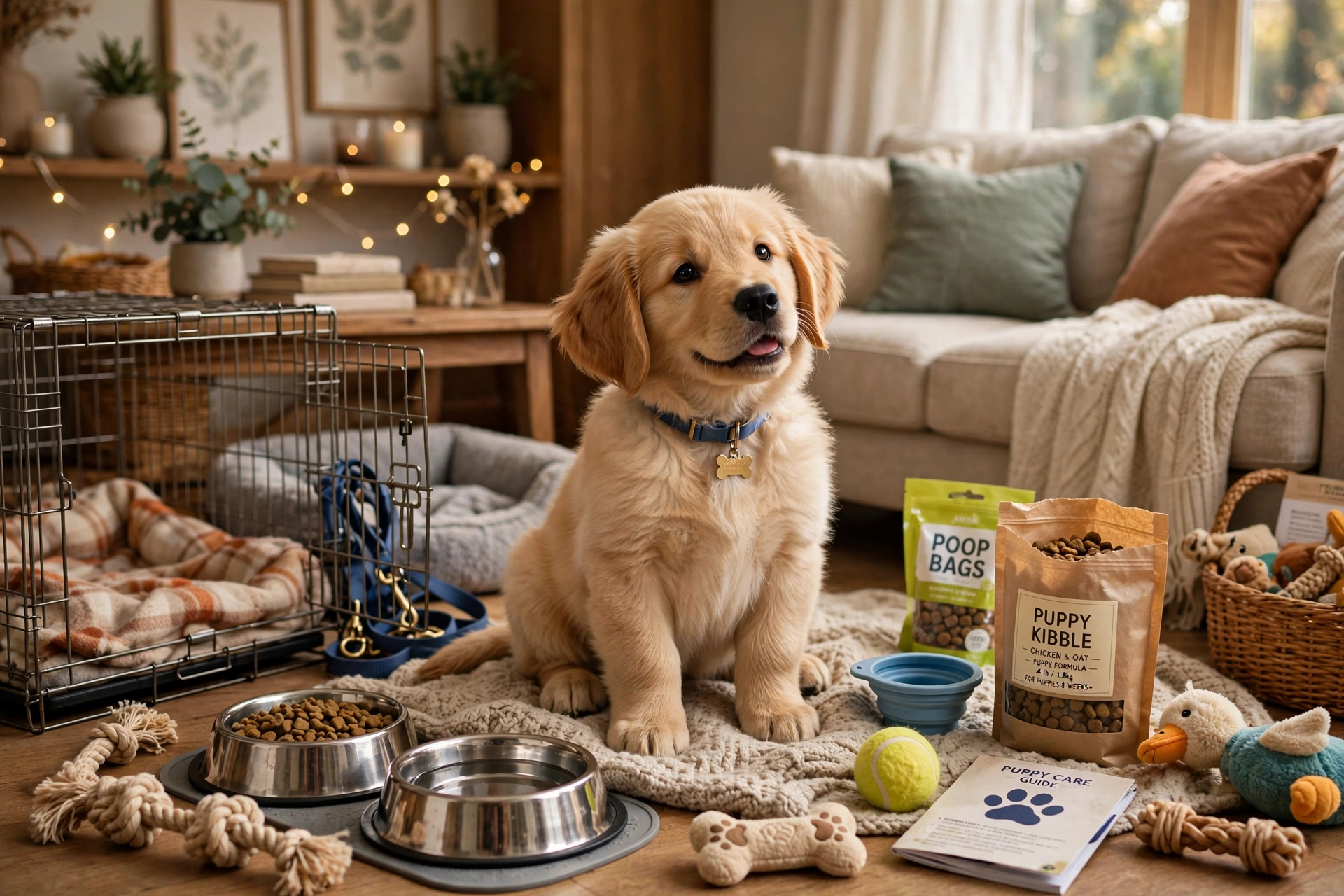
Bringing a new puppy home is one of life’s happiest moments — and one of its most hectic. This comprehensive checklist covers everything you need: essential supplies, how to puppy-proof your home, what to expect at the first vet visit, training basics, and a feeding schedule that sets your puppy up for healthy growth. Still choosing your breed? See our best dog breeds for first-time owners in the US.
Essential Puppy Supplies
Crate and Bedding
A crate gives your puppy a safe, den-like space and makes house training dramatically easier. Choose a crate large enough to stand up, turn around, and lie down — with a divider panel so it grows with your puppy. Use washable bedding.
Food and Water Bowls
Stainless steel bowls are best — durable, dishwasher-safe, and hygienic. Buy the same food your puppy has been eating for the first 1–2 weeks to avoid stomach upset.
Collar, Leash, and ID Tag
Attach an ID tag with your phone number before you even leave to pick up your puppy. Microchipping is essential too. Use a standard 4–6 foot leash — avoid retractable leashes for puppies.
Toys and Chews
- Rubber toys (like Kongs) — stuff with treats for mental stimulation
- Rope toys — supervise and discard when threads unravel
- Puppy teething toys — some can be frozen for sore gums
Cleaning Supplies
An enzymatic cleaner is non-negotiable — it breaks down odor proteins that tell your puppy “this is the bathroom spot.”
Puppy-Proofing Your Home
- Electrical cords: Secure with covers — chewing cords can be fatal.
- Houseplants: Move toxic ones (pothos, lilies, sago palm).
- Kitchen: Childproof latches on cabinets; locking-lid trash can.
- Garage: Lock up antifreeze, pesticides — antifreeze tastes sweet and is lethal.
Toxic foods to memorize: chocolate, grapes/raisins, onions/garlic, xylitol (sugar-free gum), macadamia nuts, alcohol, cooked bones.
The First Vet Visit
Schedule within 2–3 days of bringing your puppy home. Bring health and vaccination records. Also learn the 10 signs your dog needs a vet visit so you know when to call between checkups.
Vaccination Schedule
- 6–8 weeks: First DHPP combo
- 10–12 weeks: Second DHPP; bordetella if recommended
- 14–16 weeks: Third DHPP; rabies (required by law in most states)
Until vaccinations are complete (~16 weeks), avoid dog parks and heavy dog-traffic areas.
Training Basics
House Training
Take your puppy out first thing in the morning, after meals, after naps, and every 1–2 hours. Young puppies can “hold it” about one hour per month of age. Reward immediately with praise and treats. Never punish accidents.
Crate Training
Introduce gradually and keep it positive — feed meals inside with the door open first. Never use the crate as punishment.
Socialization (3–14 weeks)
Expose your puppy to many positive experiences: different people, gentle children, vaccinated dogs, car rides, various surfaces. Pair new things with treats. Puppy kindergarten classes are excellent.
Basic Commands
Start with 5-minute sessions, 2–3 times daily: name recognition, sit, come, down, leave it. Use positive reinforcement only.
Feeding Schedule
Three meals a day until ~6 months, then two. Feed at consistent times. Choose food labeled for puppies or “all life stages” with the AAFCO statement. Large-breed puppies need large-breed puppy formula. For detailed nutrition guidance, see how to choose the right dog food.
First-Year Budget
- Veterinary care: $200–$500 (vaccines, spay/neuter) + $300–$600/year preventive
- Food: $300–$700/year
- Supplies: $200–$400 initial
- Training classes: $150–$300
- Pet insurance: $300–$600/year
- Emergency fund: Keep $1,000–$2,000 accessible
Conclusion
Preparing for a puppy takes effort, but every item on this checklist pays dividends in a happier, healthier dog. Remember: perfection isn’t the goal — patience is.
Disclaimer: This article is for general informational purposes only and is not veterinary advice. Always consult your veterinarian about your puppy’s specific health needs.
Leave a Reply