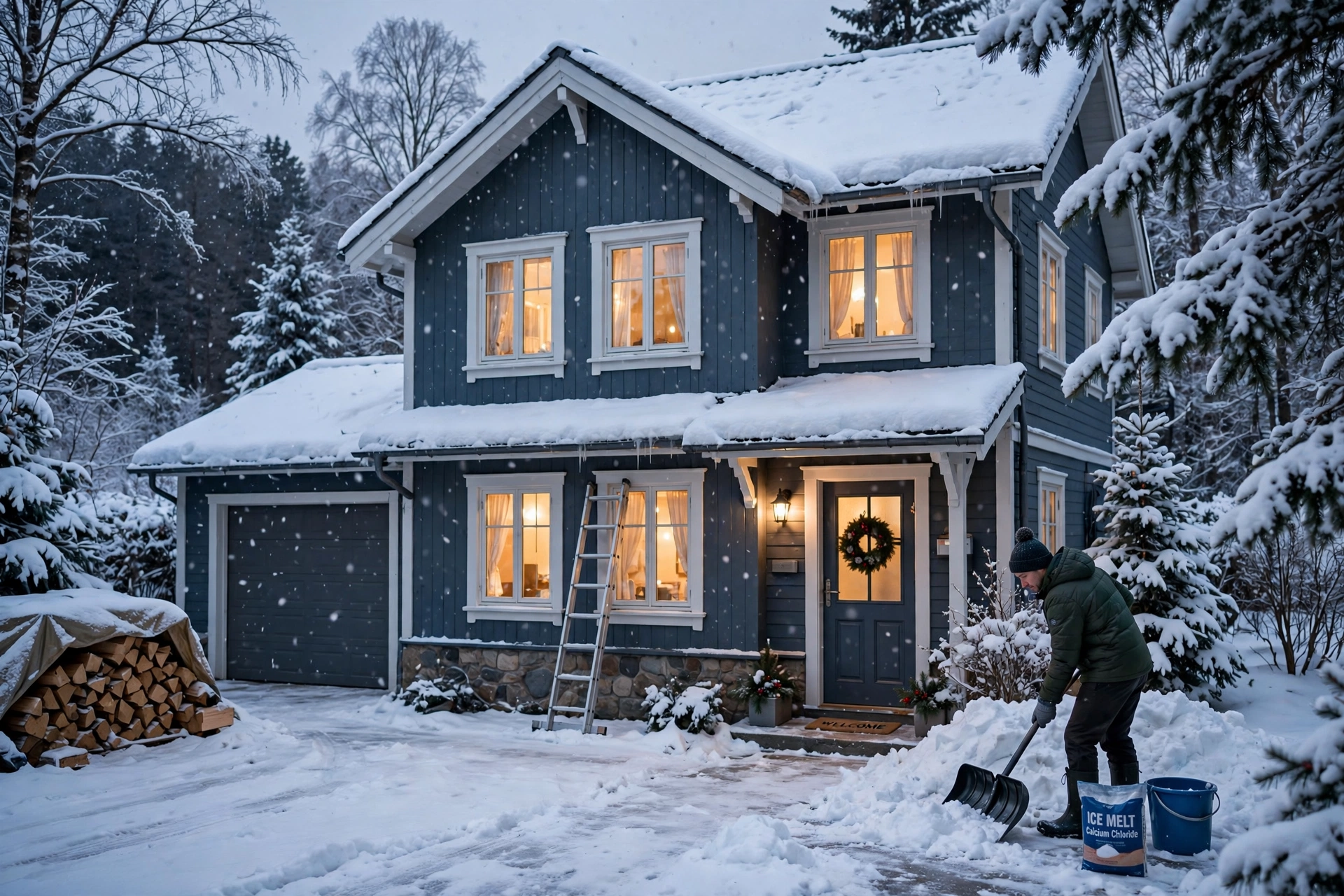
Winter is the season that tests your house. Frozen pipes burst, ice dams tear off gutters, furnaces die on the coldest night of the year, and heating bills spike. The good news: nearly all winter home damage is preventable with a few weekends of maintenance in the fall — and having the right tools on hand makes every job easier. This comprehensive checklist covers everything a US homeowner should do before and during winter.
Heating System: Your First Priority
Fall Tune-Up (September–October)
- Schedule a professional furnace inspection ($80–$150). A technician will clean burners, check the heat exchanger for cracks (a cracked heat exchanger can leak carbon monoxide), and test the ignition.
- Replace the furnace filter. Check it monthly during heating season.
- Test the thermostat. Consider upgrading to a programmable thermostat ($100–$250) — saves about 10% on heating annually.
Carbon Monoxide Safety — Non-Negotiable
- Install CO detectors on every floor. Test monthly.
- Never run a generator indoors or in an attached garage.
- If your CO alarm sounds: get everyone outside immediately, then call 911.
Plumbing: Preventing Frozen and Burst Pipes
A burst pipe can release 200+ gallons per day. The average insurance claim is around $15,000. Prevention costs almost nothing.
Before the First Freeze
- Insulate exposed pipes in basements, crawl spaces, attics, and garages. Foam sleeves cost ~$0.50/foot.
- Disconnect and drain outdoor hoses. Shut off interior valves to exterior faucets.
- Know where your main water shutoff is — every adult in the house should know.
During Extreme Cold (Below 20°F)
- Let faucets drip — a pencil-thin stream keeps water moving.
- Open cabinet doors under sinks on exterior walls.
- Keep thermostat at 65°F or above, even when away.
Roof, Gutters, and Attic: Stopping Ice Dams
Fall Inspection
- Clean gutters thoroughly. Clogged gutters are the #1 contributor to ice dams.
- Check attic insulation (R-38 to R-60) and ventilation — this is the real ice dam prevention.
- Trim overhanging branches within 6 feet of the roofline.
If Ice Dams Form
- Use a roof rake ($40–$60) from the ground after each storm.
- Don’t chip at ice with tools — you’ll damage shingles.
Windows, Doors, and Insulation
- Check weatherstripping on exterior doors ($5–$15 per door).
- Caulk gaps around window frames where you feel drafts.
- Reverse ceiling fans to clockwise at low speed to push warm air down.
- Close the fireplace damper when not in use.
Emergency Preparedness
- Flashlights + batteries, battery radio, 3 days of water (1 gallon/person/day), non-perishable food, warm blankets, phone chargers.
- Generator safety: Test monthly. Never run indoors or in garage — CO poisoning kills every winter.
- Car kit: Blanket, snacks, flashlight, shovel, sand for traction, keep tank half full.
Month-by-Month Quick Reference
September–October
- Furnace tune-up, clean gutters, disconnect hoses, seal drafts, test detectors, stock ice melt.
November
- Insulate pipes, install storm windows, reverse fans, assemble emergency kit.
December–February
- Check furnace filter monthly, roof-rake after snowfalls, drip faucets in extreme cold.
Conclusion
A $100 furnace tune-up prevents a $500 emergency call. Ten dollars of pipe insulation prevents a $15,000 water damage claim. Work through this checklist each fall, and winter becomes something you enjoy — not something you survive. Keep your essential homeowner tools ready for quick winter repairs.
Safety note: Furnace, electrical, and roofing work can be dangerous — hire licensed professionals for anything beyond basic maintenance.
Leave a Reply