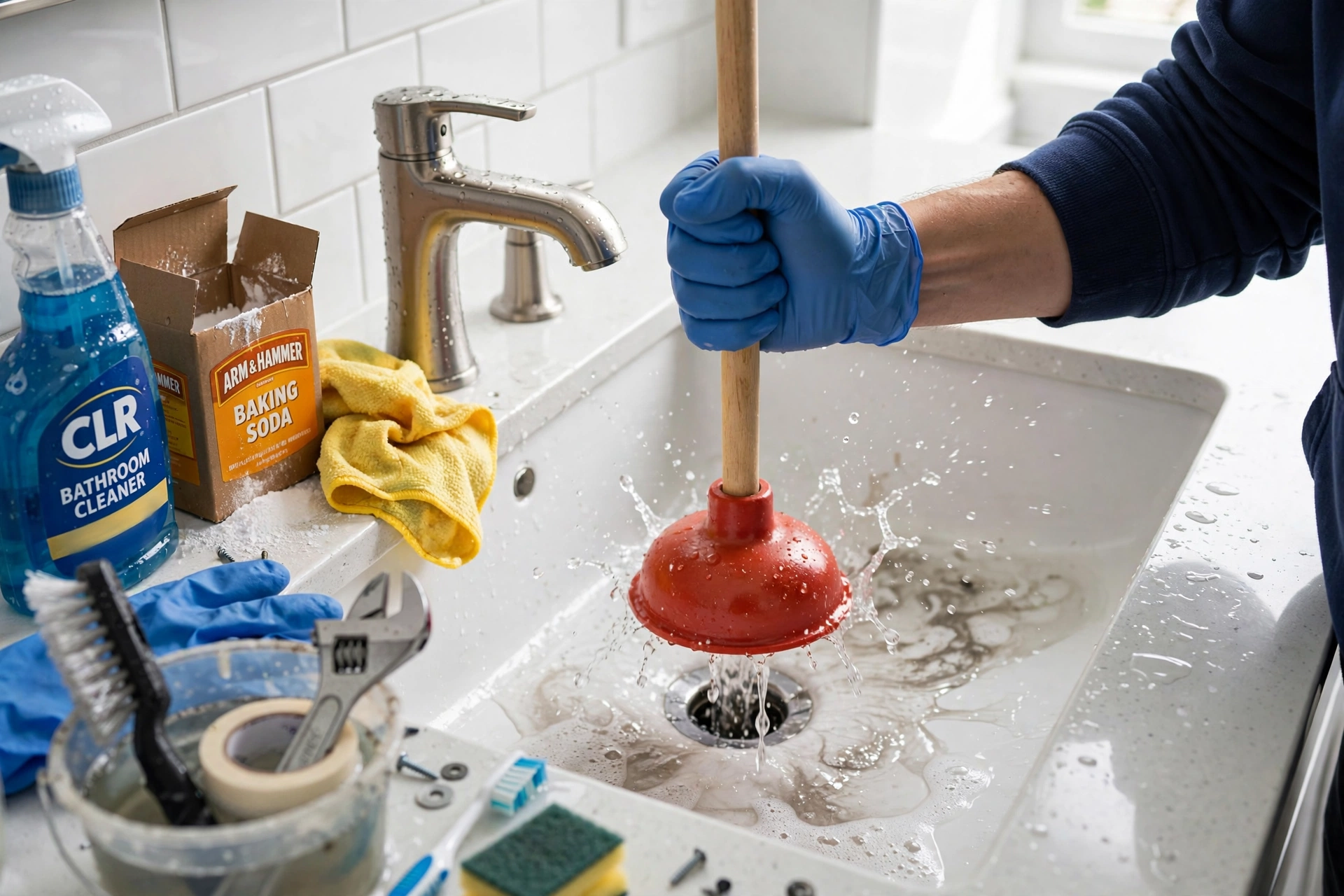
A slow or clogged drain is one of the most common household headaches — and one of the most fixable. Before you spend $150–$300 on a plumber, know this: the vast majority of drain clogs can be cleared with basic tools and methods that cost under $30. This guide covers kitchen sinks, bathroom sinks, tubs, and shower drains, walking you from the gentlest fixes to the heavy-duty options, plus how to keep drains clear in the first place.
First: Identify What Kind of Clog You Have
- Kitchen sink: Usually grease, food particles, and soap scum.
- Bathroom sink: Almost always hair mixed with soap scum and toothpaste.
- Tub and shower: Hair plus soap residue, forming a dense mat.
Warning: If multiple drains are slow at the same time, the problem may be in the main sewer line — that’s a plumber job.
Method 1: The Plunger (Yes, Really)
Use the Right Plunger
- Cup plunger (flat bottom): for sinks, tubs, and showers.
- Flange plunger (with fold-out flap): for toilets.
Proper Plunging Technique
- Fill the sink or tub with 2–3 inches of water.
- Plug the other drain or overflow hole with a wet rag.
- Place the plunger firmly over the drain, creating a seal.
- Push down firmly, then pull up sharply — 10–15 vigorous strokes.
Method 2: Remove the Stopper and Pull Out the Gunk
For bathroom sinks and tubs, use a drain snake (hair snake) — a cheap plastic strip with barbs ($3–$5). Push it down, twist, and pull up slowly. A $4 plastic hair snake is the highest-ROI tool in home plumbing.
Method 3: Baking Soda and Vinegar
- Pour 1/2 cup of baking soda down the drain.
- Follow with 1/2 cup of white vinegar.
- Cover the drain and let it fizz for 15–20 minutes.
- Flush with very hot (not boiling) tap water.
Note: This loosens light soap scum but won’t dissolve a solid hair clog. Do NOT use boiling water in PVC pipes — it can soften them.
Method 4: Dish Soap and Hot Water (Kitchen Sinks)
- Squirt 1/4 cup of grease-cutting dish soap into the drain.
- Let it sit for 5 minutes.
- Run the hottest tap water for 2–3 minutes.
Method 5: The Drain Auger
Feed the auger cable into the drain while turning the crank clockwise. When you feel resistance, keep cranking. Slowly retract — the clog should come out with it. A basic 25-foot auger costs $25–$35.
Method 6: Chemical Drain Cleaners — Use With Caution
- Never mix chemical cleaners. Mixing can create lethal chlorine gas.
- Wear gloves and eye protection.
- Never use a plunger after pouring chemicals.
- Avoid with septic systems.
Enzyme-based cleaners (like Bio-Clean) are the safer alternative for monthly prevention.
What NOT to Do
- Don’t pour grease down the drain. Ever.
- Don’t flush “flushable” wipes. They don’t break down.
- Don’t ignore a recurring clog. It signals a structural problem.
Prevention
- Mesh drain catchers in every shower and tub drain.
- Scrape plates into trash before rinsing.
- Monthly: baking soda + hot water down each drain.
When to Call a Plumber
- Multiple drains slow simultaneously
- Sewage smell or backup
- Clog returns within days
- Water backs up into tub when toilet flushes
Conclusion
Start with the plunger, graduate to the hair snake, and keep a $30 auger in the toolbox. You’ll handle 90% of drain problems yourself. Dealing with drips rather than clogs? See how to fix a leaky faucet step by step.
Safety note: Chemical drain cleaners can cause serious burns. Always follow safety precautions. Consult a licensed plumber if unsure.