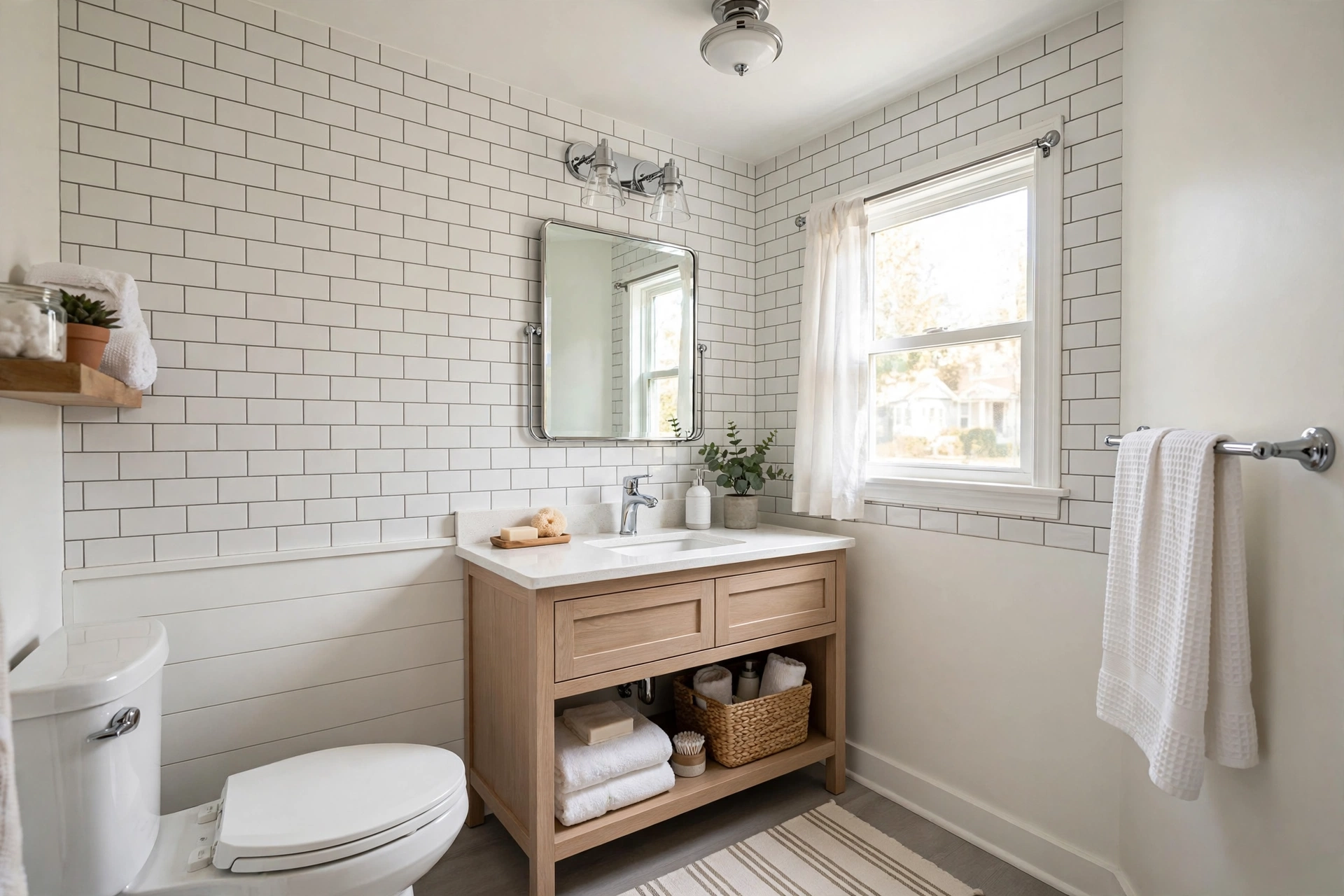
A bathroom renovation doesn’t have to drain your savings. While the average bathroom remodel in the United States costs between $10,000 and $25,000, smart planning and strategic choices can bring that number down to $3,000–$8,000 for a small to mid-sized bathroom — without making it look cheap. This guide walks you through every step: setting a realistic budget, deciding where to save and where to splurge, figuring out what you can safely DIY, and building a timeline that keeps the project on track.
Step 1: Define Your Scope and Set a Realistic Budget
Before buying a single tile, decide what kind of renovation you’re doing. Bathroom remodels fall into three tiers, and knowing which one fits your budget prevents the most common (and most expensive) mistake: scope creep.
The Three Renovation Tiers
- Cosmetic refresh ($1,500–$4,000): New paint, updated fixtures, new mirror, new lighting, recaulking, new shower curtain or glass. No plumbing or layout changes.
- Mid-range remodel ($5,000–$12,000): New vanity, toilet, flooring, tile surround, and lighting. Plumbing stays roughly where it is. This is the sweet spot for most budget renovations.
- Full gut renovation ($15,000–$30,000+): Everything comes out. Reserve this for bathrooms with serious damage or when reconfiguring the space entirely.
Build Your Budget Line by Line
For a typical 5×8-foot hall bathroom, here’s a realistic mid-range budget breakdown:
- Demolition and disposal: $300–$600
- Plumbing (fixtures stay in place): $800–$1,500
- Electrical (new lighting, GFCI outlets): $400–$800
- Flooring (materials + install): $500–$1,200
- Shower/tub surround tile: $800–$2,000
- Vanity and top: $400–$1,000
- Toilet: $150–$350
- Faucets and shower fixtures: $200–$600 — swapping a faucet is a beginner-friendly DIY; see how to fix a leaky faucet step by step.
- Paint and supplies: $100–$200
- Mirror, lighting, accessories: $200–$500
- Permits: $100–$500
- Contingency (15–20%): $750–$1,500
Where to Save vs. Where to Splurge
Save Money Here
- Tile: Basic white subway tile costs $2–$4 per square foot and looks timeless. Save expensive accent tile for a small feature.
- Vanity: A stock vanity ($250–$500) looks nearly identical to a $1,500 custom piece once installed.
- Toilet: A $180 toilet flushes just as well as a $600 designer model.
- Paint: The cheapest transformation — a gallon of quality bathroom paint ($40–$60) completely changes the room. For technique, see how to paint a room like a professional.
- Mirror: A large frameless mirror ($50–$100) makes a small bathroom feel twice as big.
Splurge (Wisely) Here
- Shower valve and waterproofing: Buy a quality valve from a major brand and use proper waterproofing behind the tile. A $200 valve today prevents a $3,000 leak repair later.
- Exhaust fan: A quiet, properly sized fan prevents mold — the number one bathroom enemy.
- Labor for tile and plumbing: A bad tile job fails within years; a good one lasts decades.
DIY vs. Hire a Pro
Safe DIY Tasks
- Demolition, painting, installing vanity/toilet/mirror, caulking and grouting, installing accessories.
Hire a Licensed Pro For
- Moving drain lines, electrical work beyond swapping fixtures, shower tile and waterproofing, anything requiring a permit.
Smart Shopping Strategies
- Buy floor models and open-box items for 30–50% off.
- Check Habitat for Humanity ReStores for donated materials at deep discounts.
- Keep the plumbing where it is — moving a toilet can cost $1,500–$3,000.
- Refinish instead of replace — reglazing a tub costs $300–$600 vs $1,500+ to replace.
Conclusion
A budget bathroom renovation is a series of smart trade-offs, not sacrifices. Keep the plumbing where it is, spend on what’s behind the walls, save on what’s in front of them, and do the demolition and finishing work yourself.
Safety note: Plumbing and electrical work must comply with local building codes. When in doubt, hire a licensed professional.
Leave a Reply