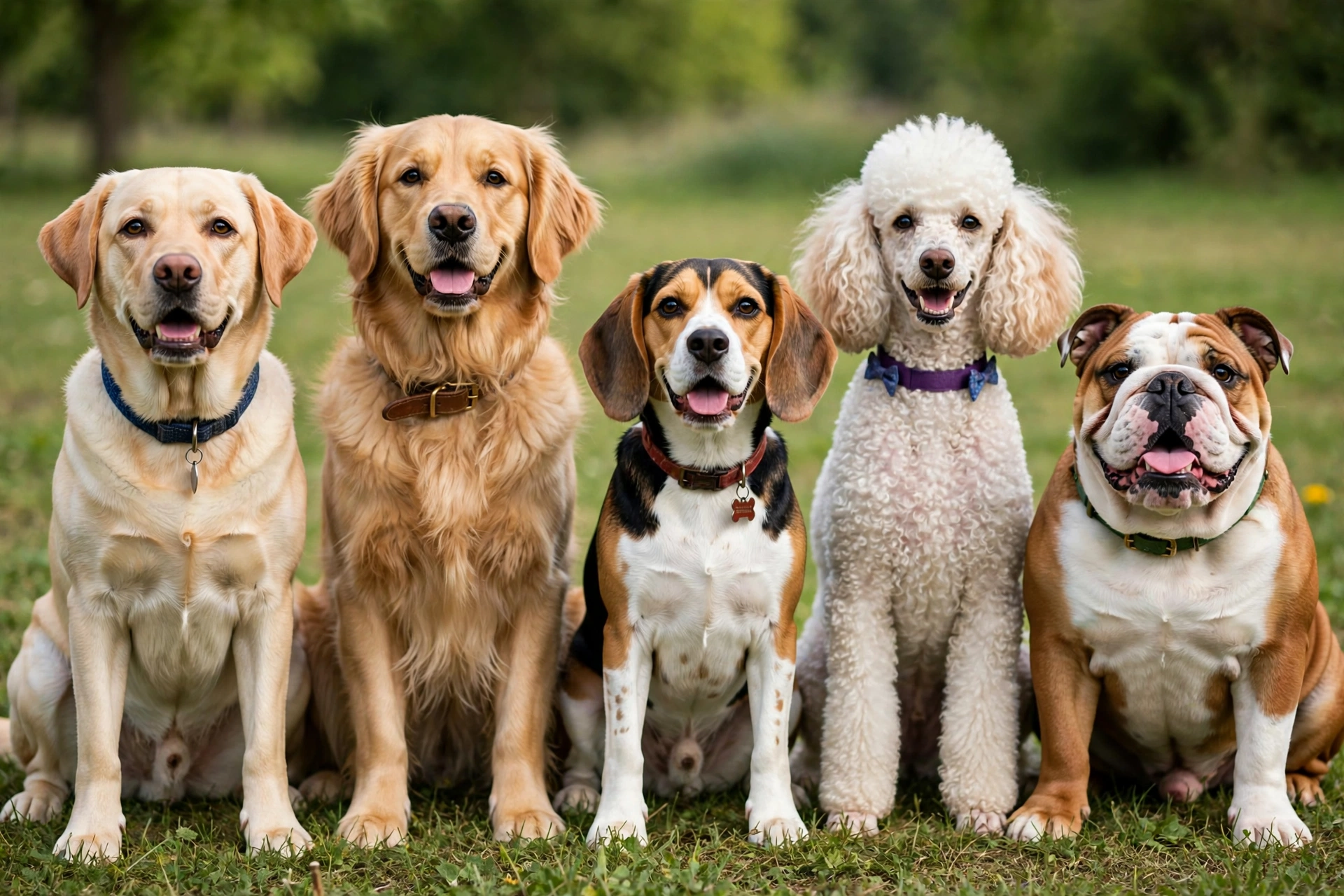
Choosing your first dog is one of the most exciting — and consequential — decisions you’ll make. The right breed for a first-time owner isn’t the most popular or cutest puppy. It’s the dog whose energy, training needs, and temperament fit your actual life. This guide profiles 12 breeds that do well with beginners, with honest notes on what each needs. Once you’ve picked a breed, our new puppy checklist covers everything to prepare before bringing your puppy home.
What Makes a Breed Good for Beginners?
- Trainability: Eager-to-please breeds that respond to positive reinforcement.
- Forgiving temperament: Tolerates rookie mistakes without behavior problems.
- Moderate energy: Satisfied with daily walks rather than marathon exercise.
- Manageable grooming: Low-to-moderate needs while you’re learning.
The 12 Best Breeds for First-Time Owners
1. Labrador Retriever
Temperament: Cheerful, social, great with kids. Exercise: High — 1–2 hours daily. Grooming: Low; heavy seasonal shedding. Watch for: Prone to obesity; hip issues.
2. Golden Retriever
Temperament: Gentle, patient, devoted. Exercise: High — 1–2 hours daily. Grooming: Moderate-high; brush 2–3x weekly. Watch for: High cancer rates; skin allergies.
3. Cavalier King Charles Spaniel
Temperament: Sweet, gentle, adaptable. Exercise: Moderate — 30–60 min daily. Grooming: Moderate. Best for: Apartments, seniors. Watch for: Heart issues (mitral valve disease).
4. Poodle (Miniature or Standard)
Temperament: Among the smartest breeds; learns fast. Exercise: Moderate-high. Grooming: High — professional grooming every 6–8 weeks. Best for: Allergy sufferers; people who enjoy training.
5. Shih Tzu
Temperament: Affectionate, charming. Exercise: Low-moderate. Grooming: High in full coat; easier with puppy cut. Best for: Apartments, less active owners.
6. Beagle
Temperament: Merry, curious, great with kids. Exercise: Moderate-high — 1+ hours daily. Grooming: Low. Watch for: Vocal (baying); strong prey drive; prone to overeating.
7. Boxer
Temperament: Playful, loyal, great with children. Exercise: High — 1.5+ hours vigorous daily. Grooming: Low. Watch for: High cancer risk; jumpy — training essential.
8. Bichon Frise
Temperament: Cheerful, gentle, hypoallergenic. Exercise: Moderate — 30–60 min daily. Grooming: High — daily brushing, grooming every 4–6 weeks. Watch for: Separation anxiety.
9. Cocker Spaniel
Temperament: Sweet, eager to please. Exercise: Moderate — ~1 hour daily. Grooming: Moderate-high; ears need regular cleaning. Watch for: Ear infections common.
10. Papillon
Temperament: Bright, trainable, sturdy for a toy breed. Exercise: Moderate. Grooming: Low-moderate. Best for: Apartments; owners wanting a smart small dog.
11. Bernese Mountain Dog
Temperament: Calm, affectionate gentle giant. Exercise: Moderate. Grooming: Moderate-high; heavy shedding. Watch for: Short lifespan (6–8 years); overheats easily.
12. Mixed Breed / Rescue Dog
A well-chosen adult rescue can be the perfect first dog — adult size, energy, and temperament are already apparent. Shelter staff can match you to your lifestyle. Many rescues offer trial foster periods.
Breeds First-Timers Should Think Twice About
- Border Collie, Australian Shepherd, Belgian Malinois: Need intense daily work; invent destructive “jobs” when bored.
- Chow Chow, Akita: Strong-willed guardians needing experienced handling.
- Siberian Husky: Escape artists with marathon energy needs.
5 Questions Before You Commit
- How many hours am I home? Puppies need midday breaks.
- What’s my real activity level? Be honest.
- Can I afford it? Budget $1,500–$3,000+/year plus emergency savings. Food is a major ongoing cost — learn how to choose the right dog food for complete nutrition.
- Does my housing allow dogs? Check restrictions first.
- Am I ready for 10–15 years? It’s a decade-plus commitment.
Conclusion
The best first dog is the one whose needs match your life. Do your honest self-assessment, meet several dogs, and prioritize temperament and lifestyle fit over looks.
Disclaimer: This article is for general informational purposes only. Consult your veterinarian about health and consider a certified professional trainer for behavior concerns.