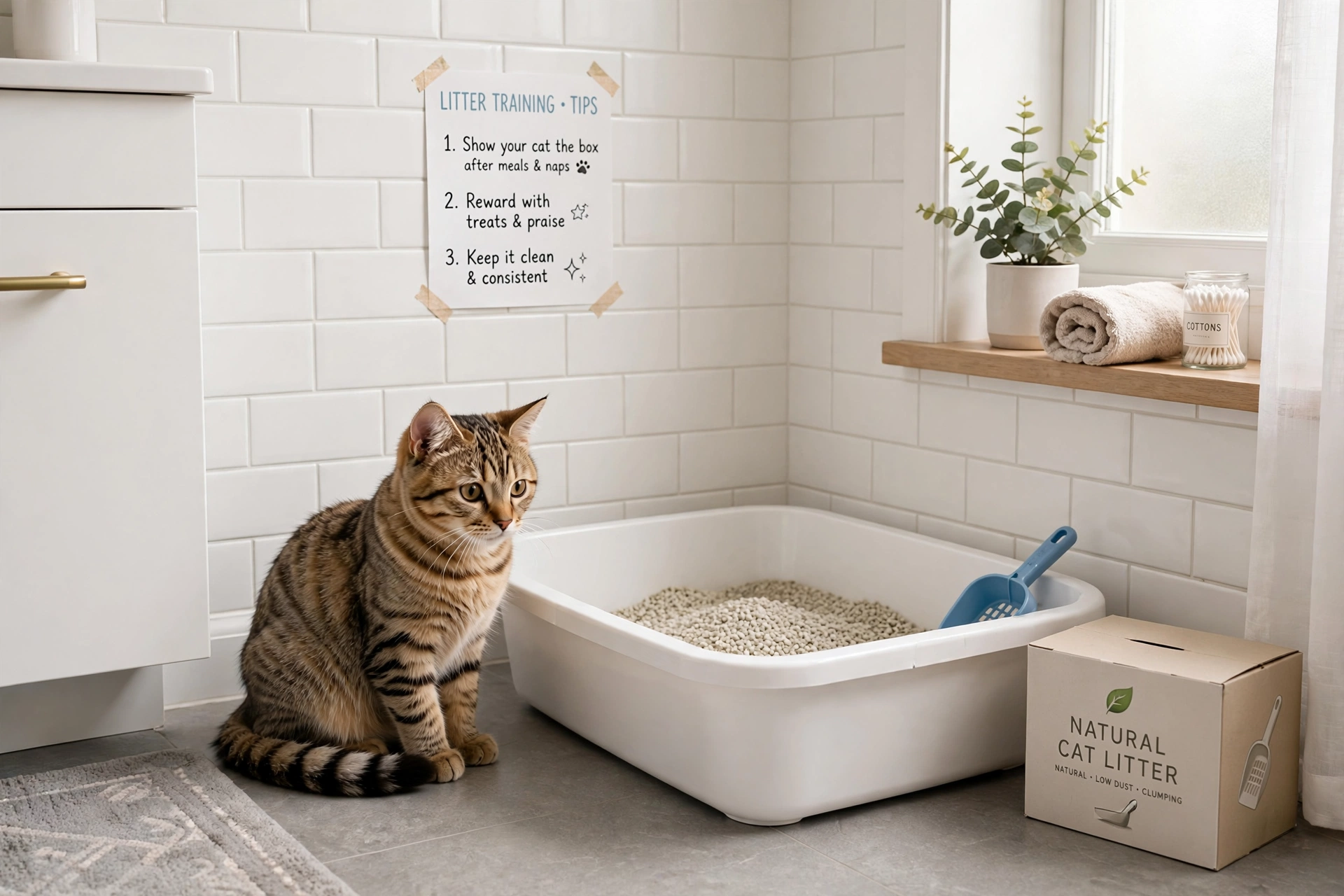
Bringing a new cat home is one of life’s great joys. The good news: cats are naturally clean animals with a strong instinct to bury their waste, so most kittens take to a litter box with minimal coaching. To keep your new cat healthy overall, also check out our guide to grooming your cat at home for brushing, nail trimming, and bathing tips. This guide covers choosing litter and boxes, placement, training steps, troubleshooting, and when a litter issue is actually a vet visit in disguise.
Choosing the Right Litter Box
Size Matters More Than Style
Your cat should be able to turn around comfortably. The box should be at least 1.5x the length of your cat — for most adults, 22–24 inches long. Large, low-sided storage containers often work better than fancy pet-store boxes.
Open vs. Covered Boxes
Start with an open box. Covered boxes trap smells and make cats feel cornered. If odor is a concern, scoop more often — not a lid.
Choosing the Right Cat Litter
- Clumping clay: Most popular. Easy to scoop, good odor control. Keep 3–4 inches deep.
- Silica gel crystals: Excellent odor absorption, but the texture bothers some cats.
- Natural/biodegradable: Corn, wheat, walnut, pine, or paper. Good for kittens (avoid clumping clay under 4 months — ingested clumps can cause blockages).
- Scented vs. unscented: Choose unscented. Perfume can repel cats.
Where to Put the Litter Box
- Quiet but accessible — not next to the washing machine or a slamming door.
- One per floor in multi-story homes.
- Away from food and water — cats avoid eliminating near food.
- The n+1 rule: one box per cat, plus one extra. Two cats? Three boxes.
Training Steps: Kittens
- Show, don’t force: Place her in the box to sniff and explore.
- Time it right: After meals, naps, and play — carry her to the box.
- Praise calmly when she uses it.
- Handle accidents neutrally: Clean with enzymatic cleaner. Never punish.
- Keep it clean: Scoop daily (twice is better).
Troubleshooting Common Problems
Poops outside but pees inside
Box may be too small or not clean enough. Add a second box nearby.
Suddenly stopped using the box
Vet visit first. UTIs, bladder stones, kidney disease, arthritis, and constipation are common medical causes. Rule out health issues before assuming behavioral.
Goes right next to the box
Usually too dirty, too small, or sides too high. Try a larger box with lower sides.
Multi-cat conflicts
Add boxes in different rooms so no cat can guard all of them.
Litter Box Hygiene Schedule
- Daily: Scoop solids and clumps.
- Every 2–4 weeks: Empty completely, scrub with mild soap, refill.
- Yearly: Replace plastic boxes (plastic absorbs odor over time).
When to Call the Veterinarian
- Straining to urinate, crying in the box, or tiny amounts
- Blood in urine or stool
- Sudden avoidance of a previously accepted box
Male cats who strain without producing urine need emergency care — a blocked urethra can be fatal within 24–48 hours.
Conclusion
A big, clean, unscented box in a quiet spot, plus patience. Most kittens master it within days. Stay consistent with scooping, never punish accidents, and treat sudden changes as a possible health signal. Pair good litter habits with the brushing and grooming basics to keep your cat clean from head to tail.
Disclaimer: This article is for general informational purposes only and is not veterinary advice. Consult a licensed veterinarian if your cat shows signs of illness.