Tag: cat care

  • How to Groom Your Cat at Home: Brushing, Nails, and Bathing

    How to Groom Your Cat at Home: Brushing, Nails, and Bathing

    Cats spend 3–5 hours a day grooming themselves — so do they need our help? Absolutely. Regular home grooming prevents painful matting, reduces hairballs, keeps nails from growing into paw pads, and lets you spot skin problems early. This guide covers brushing, nail trimming, and bathing, plus techniques for difficult cats. Grooming is only half of keeping a cat clean — pair it with our cat litter box training guide for new cat owners to keep the litter box as fresh as the coat.

    Essential Grooming Tools

    • Slicker brush: Removes loose fur and light tangles.
    • Steel comb: Essential for long-haired cats — finds tangles the brush misses.
    • Cat nail clippers + styptic powder (for nicks).
    • Cat-safe shampoo only — never human or dog shampoo (some dog products contain permethrin, toxic to cats).
    • Treats: The most important “tool” — turn grooming into a reward session.

    Brushing: Technique and Frequency

    • Short-haired: Once a week (2–3x during shedding season).
    • Medium-haired: 2–3 times per week.
    • Long-haired: Daily — non-negotiable.
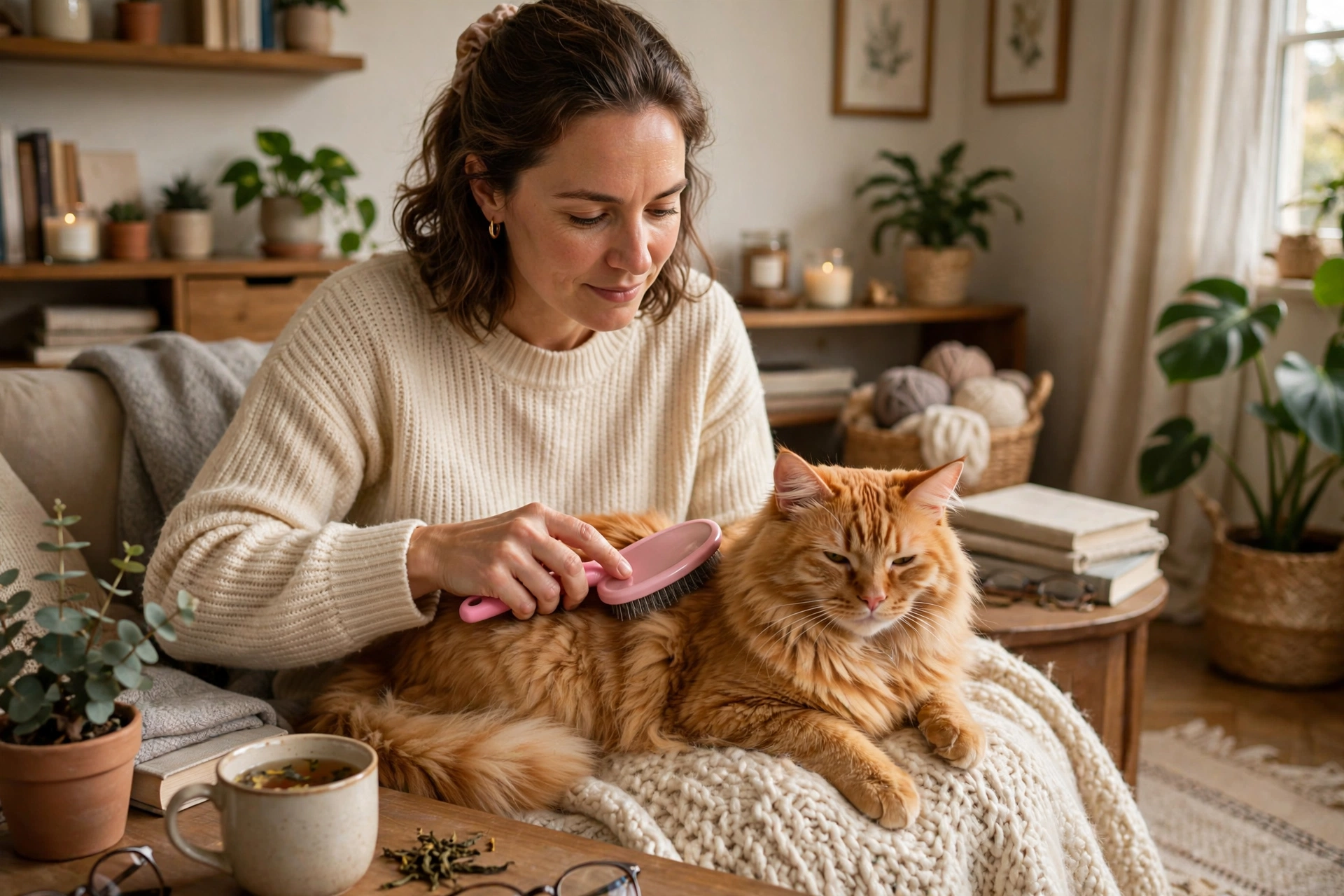
    1. Start when calm — after a meal or nap. Let your cat sniff the brush first.
    2. Brush in the direction of hair growth with gentle, short strokes.
    3. Work in sections; save sensitive areas (belly, legs) for last.
    4. Watch body language: Stop at tail lashing, skin rippling, ears flattening, or growling.
    5. End with treats and praise — even if the session was short.

    Mats: Never cut with scissors — cat skin is paper-thin and tents inside mats. Leave tight mats for a professional groomer.

    Nail Trimming: Step-by-Step

    Most indoor cats need a trim every 2–4 weeks.

    1. Handle paws for several days first (treat and release) — don’t clip yet.
    2. Identify the quick: the pink triangle inside light nails. On dark nails, trim only the hooked tip.
    3. Clip at 45 degrees, only the curved tip (1–2mm past the hook).
    4. You don’t have to do all ten at once — 2–3 per session is fine.
    5. If you nick the quick: apply styptic powder, give a treat, try again another day.

    Bathing: When and How

    Most cats never need a full bath. Bathe only for: sticky/toxic substances, vet-prescribed medicated shampoo, or elderly/obese cats who can’t groom.

    1. Prepare everything first: shampoo, towels, treats, non-slip mat.
    2. Use 2–3 inches of lukewarm water. Avoid running water/sprayers — use a cup.
    3. Wet body (not head), lather, rinse thoroughly. Clean face with damp cloth only.
    4. Dry by blotting with microfiber towel. Keep in warm room until dry.

    Never: dunk your cat, use essential oils (tea tree, eucalyptus, citrus are toxic to cats), or bathe a highly stressed cat.

    Handling Difficult Cats

    • Desensitize gradually — tiny steps, each paired with rewards.
    • Keep sessions short: two good minutes beat ten miserable ones.
    • Try the “burrito”: wrap in towel with one paw exposed.
    • Use a lick mat with purée as a distraction.
    • Know when to outsource — no shame in using a professional groomer.

    Grooming Schedule Cheat Sheet

    • Daily: Brush long-haired cats.
    • Weekly: Brush short/medium-haired cats; check ears and eyes.
    • Every 2–4 weeks: Trim nails.
    • As needed: Baths (rarely); dental care several times weekly.

    Conclusion

    A few minutes of brushing weekly, a calm nail trim every few weeks, and the rare bath will keep your cat comfortable and give you early warning of health issues. Start slow, reward generously, and respect your cat’s limits. Combine your grooming routine with good litter box habits and your cat will stay clean from head to tail.

    Disclaimer: This article is for general informational purposes only and is not veterinary advice. Consult a licensed veterinarian if your cat shows signs of illness.
  • Cat Litter Box Training: Complete Guide for New Cat Owners

    Cat Litter Box Training: Complete Guide for New Cat Owners

    Bringing a new cat home is one of life’s great joys. The good news: cats are naturally clean animals with a strong instinct to bury their waste, so most kittens take to a litter box with minimal coaching. To keep your new cat healthy overall, also check out our guide to grooming your cat at home for brushing, nail trimming, and bathing tips. This guide covers choosing litter and boxes, placement, training steps, troubleshooting, and when a litter issue is actually a vet visit in disguise.

    Choosing the Right Litter Box

    Size Matters More Than Style

    Your cat should be able to turn around comfortably. The box should be at least 1.5x the length of your cat — for most adults, 22–24 inches long. Large, low-sided storage containers often work better than fancy pet-store boxes.

    Open vs. Covered Boxes

    Start with an open box. Covered boxes trap smells and make cats feel cornered. If odor is a concern, scoop more often — not a lid.

    Choosing the Right Cat Litter

    • Clumping clay: Most popular. Easy to scoop, good odor control. Keep 3–4 inches deep.
    • Silica gel crystals: Excellent odor absorption, but the texture bothers some cats.
    • Natural/biodegradable: Corn, wheat, walnut, pine, or paper. Good for kittens (avoid clumping clay under 4 months — ingested clumps can cause blockages).
    • Scented vs. unscented: Choose unscented. Perfume can repel cats.

    Where to Put the Litter Box

    • Quiet but accessible — not next to the washing machine or a slamming door.
    • One per floor in multi-story homes.
    • Away from food and water — cats avoid eliminating near food.
    • The n+1 rule: one box per cat, plus one extra. Two cats? Three boxes.

    Training Steps: Kittens

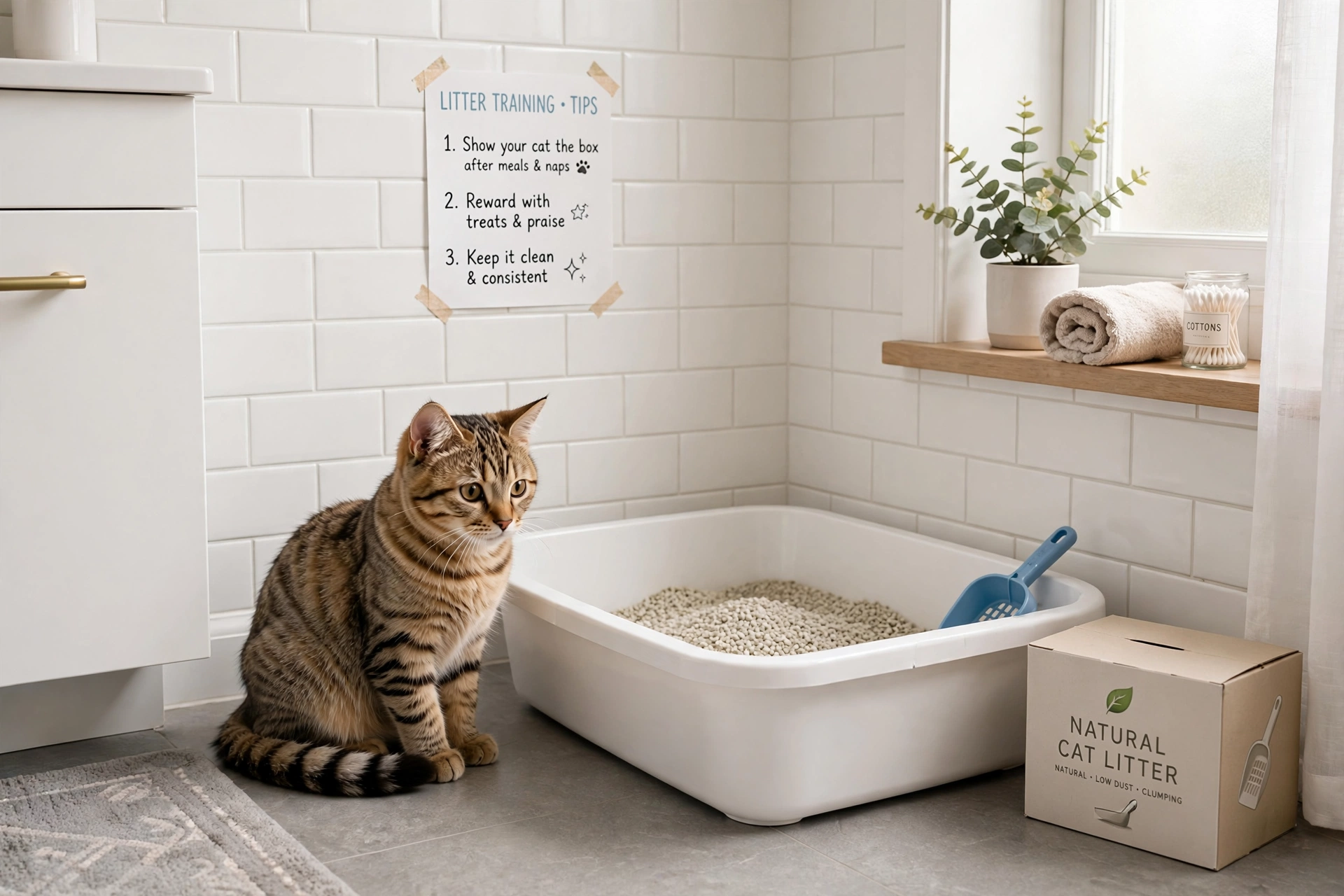
    1. Show, don’t force: Place her in the box to sniff and explore.
    2. Time it right: After meals, naps, and play — carry her to the box.
    3. Praise calmly when she uses it.
    4. Handle accidents neutrally: Clean with enzymatic cleaner. Never punish.
    5. Keep it clean: Scoop daily (twice is better).

    Troubleshooting Common Problems

    Poops outside but pees inside

    Box may be too small or not clean enough. Add a second box nearby.

    Suddenly stopped using the box

    Vet visit first. UTIs, bladder stones, kidney disease, arthritis, and constipation are common medical causes. Rule out health issues before assuming behavioral.

    Goes right next to the box

    Usually too dirty, too small, or sides too high. Try a larger box with lower sides.

    Multi-cat conflicts

    Add boxes in different rooms so no cat can guard all of them.

    Litter Box Hygiene Schedule

    • Daily: Scoop solids and clumps.
    • Every 2–4 weeks: Empty completely, scrub with mild soap, refill.
    • Yearly: Replace plastic boxes (plastic absorbs odor over time).

    When to Call the Veterinarian

    • Straining to urinate, crying in the box, or tiny amounts
    • Blood in urine or stool
    • Sudden avoidance of a previously accepted box

    Male cats who strain without producing urine need emergency care — a blocked urethra can be fatal within 24–48 hours.

    Conclusion

    A big, clean, unscented box in a quiet spot, plus patience. Most kittens master it within days. Stay consistent with scooping, never punish accidents, and treat sudden changes as a possible health signal. Pair good litter habits with the brushing and grooming basics to keep your cat clean from head to tail.

    Disclaimer: This article is for general informational purposes only and is not veterinary advice. Consult a licensed veterinarian if your cat shows signs of illness.